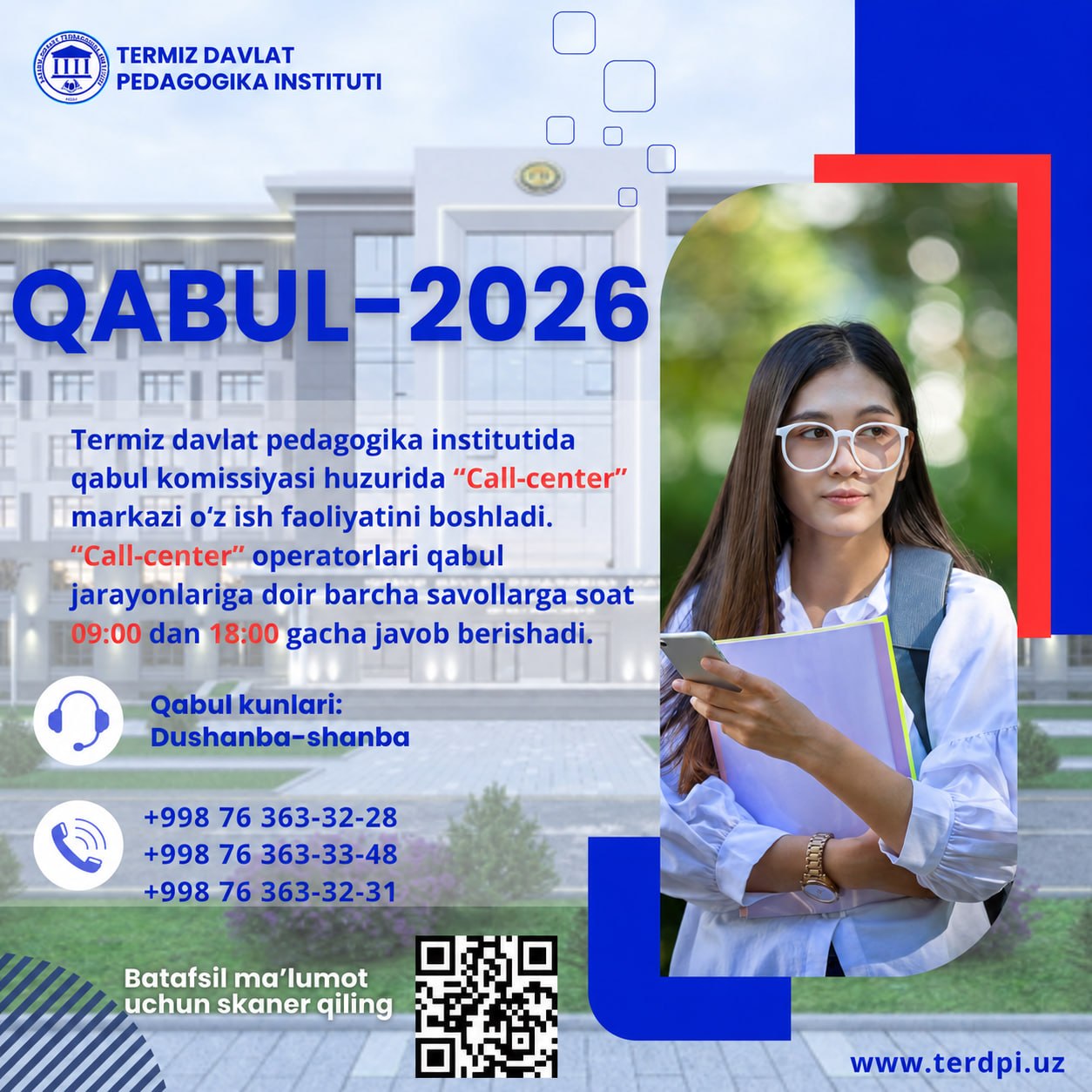
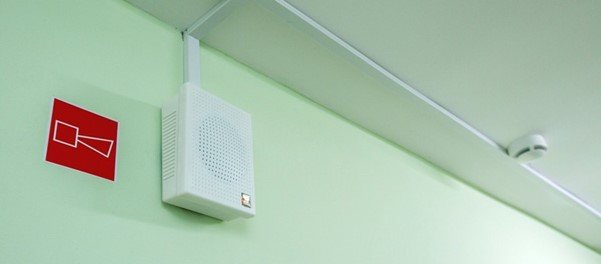
The Institute has created all the conditions for the implementation of inclusive education. In the educational buildings No. 2 and No. 4, a barrier-free architectural environment is organized (accessibility of the adjacent territory, entrance routes and movement routes inside the building, the presence of a specially equipped sanitary and hygienic room, a warning and alarm system). The educational process is carried out using distance learning technologies in combination with traditional forms. For disabled students and students with disabilities, there is an opportunity to study on an individual schedule according to adapted educational programs, including passing exams and tests in a distance form.
The Institute pays special attention to ensuring the necessary requirements for organizing the education of people with disabilities.
For visually impaired persons:
The official website of the Termez State Pedagogical Institute on the Internet has been adapted to meet the special needs of visually impaired persons.
The following is installed in the educational buildings:
• audible fire alarm;
• monitors for audio reference information.
Classrooms are equipped with:
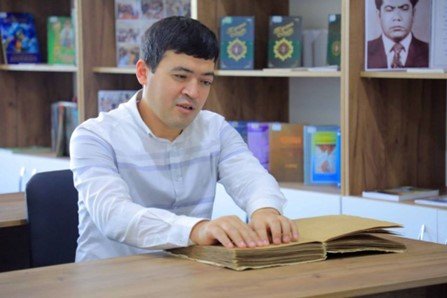
• magnifying devices;
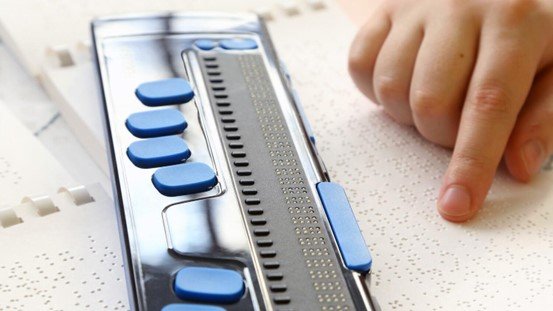
• typhlocomplex "Reading machine";
• workstations with a Braille display and a Braille printer, special software;
• various audio technical means;
• tables at least 1 m wide and 0.6 m deep for placing Braille literature.
For the hearing impaired:
To ensure the educational process, the following are installed in the educational buildings:
• 3 monitors for duplicating audio reference information with subtitles;
• light alarms;
• fire safety evacuation signs indicating the direction of movement, connected to the warning and evacuation management system for people in case of fire, to the warning system for natural disasters and extreme situations.
The educational buildings are equipped with Wi-Fi access from mobile devices at a speed of 100 Mbit/s.
There are classrooms with a sound system, in which a sound amplification system for individual use is located.
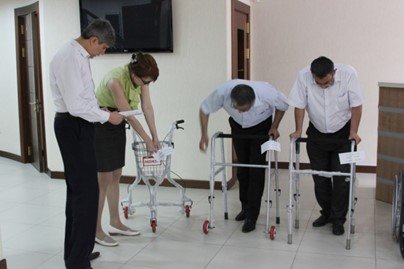
For persons with musculoskeletal disorders:
The Institute's academic buildings:
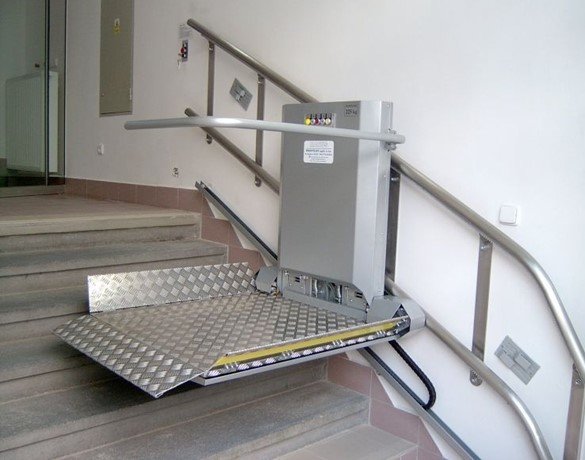
• are equipped with lifting platforms;
• have recreation areas for 9-12 people, including those for wheelchair users;
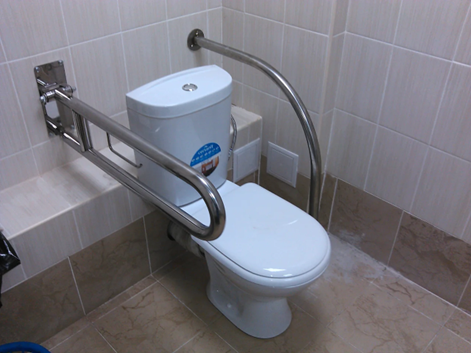
• have specialized sanitary and hygienic facilities for persons with disabilities, including those with fixed and folding handrails.
Classrooms:
• at least 5% of the seats in the classrooms are equipped for persons with musculoskeletal disorders, including special chairs with the ability to connect technical teaching aids to the electrical network;
• have widened doorways without thresholds or differences in floor height, which allows persons with disabilities to move freely around the university premises.


Qo'shimcha savollar uchun quyidagi raqamlarga qo'ng'iroq qiling:
+998 76 228 77 25 Termiz tumani, “Yangiobod” MFY, At-Termiziy ko‘chasi 1 A-uy